

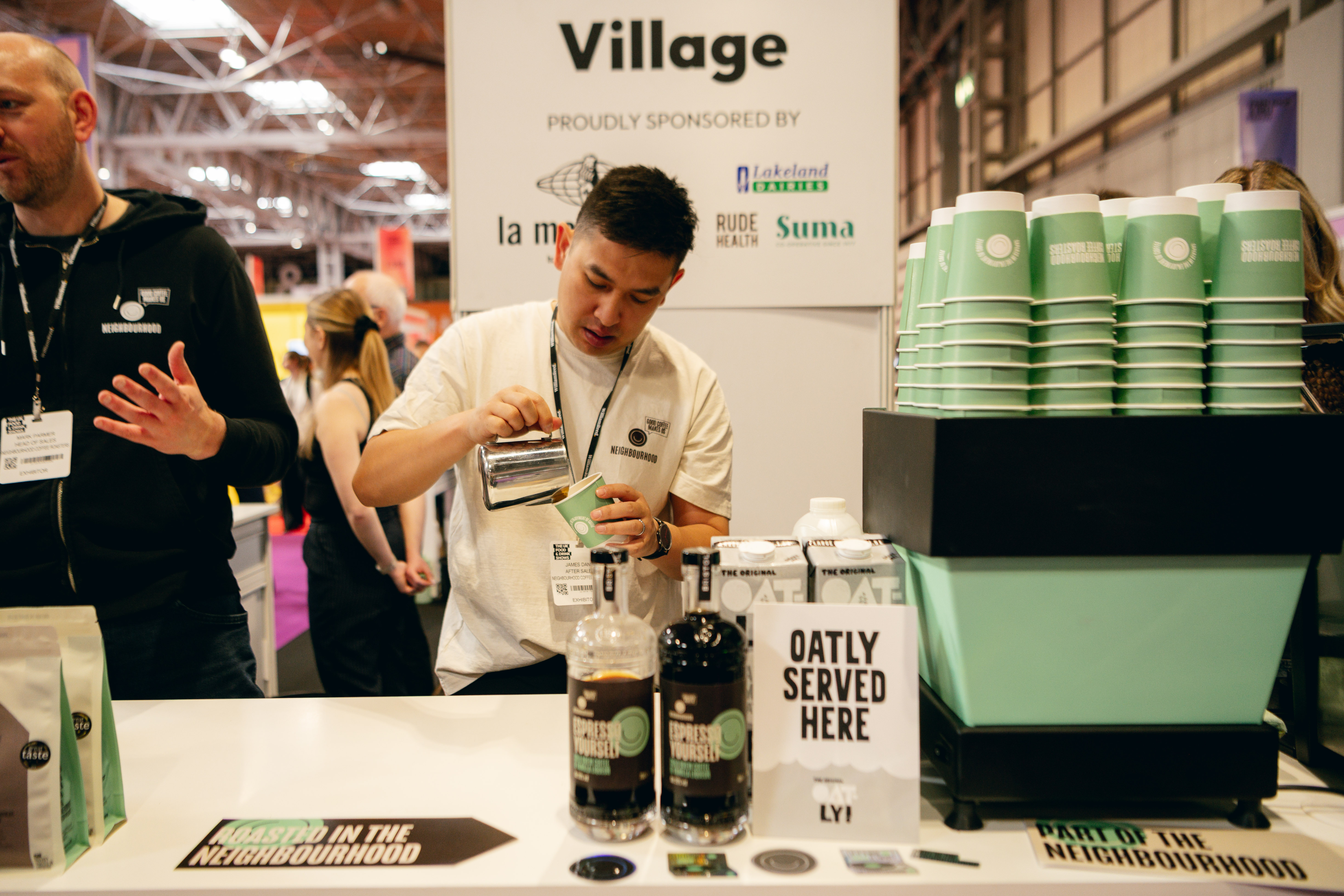
Based on the sessions "Social media in 2026: Trends to watch", "From scroll to sale: Unlocking growth with TikTok" and "From pop-up to powerhouse: Inside Fallow", delivered at The UK Food & Drink Shows 2026.
Kieran Corbitt, Creative Director at MeMo, warned a full Grocer Stage that "your next customer isn't following you". That warning sits at the centre of the social media trends 2027 will bring for food and drink brands. The feed now decides who sees a post, and increasingly who buys. In two other sessions, TikTok's FMCG team and the chief operating officer of Fallow, the London restaurant group, showed what that means for a brand and for an operator.
- From sessions:
- Social media in 2026: Trends to watch (Grocer Stage, 14 April 2026)
- From scroll to sale: Unlocking growth with TikTok (Grocer Stage, 13 April 2026)
- From pop-up to powerhouse: Inside Fallow (Restaurant Stage, 13 April 2026)
- Speakers:
- Kieran Corbitt, Creative Director, MeMo
- Faisal Al-Sabti, New Business Lead, FMCG, TikTok
- Ema Delacote, Business Development Manager, FMCG, TikTok
- Paul Robinson-Webster, Chief Operating Officer, Fallow
- Host (Inside Fallow): Stefan Chomka, Editor, Restaurant
- Estimated read time: 7 minutes
Quick read summary
- The social media trends 2027 inherits from the show floor are realness over polish, reach over followers and the sale moving inside the app.
- Lo-fi video is outperforming high-production content, and Fallow's unedited, behind-the-scenes posts drive its bookings.
- Platforms now serve content to people who do not follow you, so reach, saves and shares are the measures that count.
- On TikTok Shop, creators sell more than brands do, and products built for the platform convert first-time buyers.
- The algorithm changes constantly, so test formats rather than betting the year on one.
Why is lo-fi content beating polished posts?
Because people trust what looks real. "We've seen that low fi content is working so much better than high res content," Corbitt said. His agency moved one client, GAIL's, from polished stills to lo-fi video, and the video did better. TikTok forced brands to "relinquish brand control", he said, and that rougher look has spread to Instagram, LinkedIn and YouTube. People want to see "a real brand", not "that kind of polished Pinterest feeling".
Fallow is the operator proof. Paul Robinson-Webster, Chief Operating Officer of Fallow, which also runs Fowl and Roe, described the group's approach as "radical transparency", a window into how the restaurant runs. Its best performing post followed co-founder Will Murray through a day on a head camera, "completely unedited", and reached about 6.7 million views. Murray still leads its social media, which fits Corbitt's point that founder-led stories are working.
Your next customer is not following you
The algorithm now serves content to people who have never followed the account. TikTok started it, Corbitt said, and YouTube Shorts and LinkedIn have followed. "But the most important metrics that we're looking at is reach, engagement, saves, shares." Follower counts still matter for smaller brands chasing partnerships, but the better test is "is this interesting rather than do I follow this person?"
Repeatable formats pass that test more often than viral stunts. Corbitt's agency moved The Pig hotel group, another client, off offer-led posts and onto storytelling and day-in-the-life content. He put the result at 35.8 million impressions and 62,818 new followers. A five-minute meal series with chef Theo Randall worked because people return to a format they recognise.
Carousels are back too. Corbitt cited Buffer research. Buffer's own analysis of more than four million Instagram posts sent between 2022 and 2024 found reels get 36 per cent more reach than carousels, while carousels earn 12 per cent more engagement. Use reels to be found and carousels to be read.
How does a scroll become a sale?
By putting the checkout inside the content. That is social commerce. Faisal Al-Sabti, New Business Lead for FMCG at TikTok, described TikTok Shop as discovery commerce, against the "shopping list mentality" of Amazon: people find products they were not looking for.
Four steps travel well. List one to three hero products. Build something only TikTok sells, such as a mixed case of six flavours as a trial pack. Put every product on the open plan, so any creator can request a sample. Use live selling for urgency.
"But I always ask myself, why would I buy on TikTok and not somewhere else?", Faisal Al-Sabti
Creators matter most. "We have seen that a brands post content doesn't usually do as well as creators," said Ema Delacote, Business Development Manager for FMCG at TikTok. According to TikTok's own figures, the UK has more than 40 million monthly users, and 71 per cent of users say creator authenticity has motivated a purchase.
Lidl is the clearest food example. In March 2025 it offered 6,000 Dubai-style chocolate bars on TikTok Shop, and Lidl said they sold out in just over an hour, at 72 bars a minute. It then put the bar into stores, with a limit of two per customer.
Restaurants could not sell tables on TikTok Shop, which took products, not services, at the time of the session, but the feed still fills dining rooms. Asked whether social drives customers to Fallow, Robinson-Webster said some diners book two or three months ahead after seeing the content, and ask to sit at the chef's counter.
"So does it drive customers to the restaurant? No question.", Paul Robinson-Webster
Social media trends 2027: what carries over, and what will not?
The direction carries; the formats will not. Corbitt opened his talk with trend forecaster WGSN's Future Consumer 2027: Emotions forecast, published in May 2025, which sets out six emotions it expects to shape consumer behaviour in 2027. They include Suspicious Optimism about AI, Strategic Joy and Witherwill, which Corbitt described as a craving to escape responsibility. Because the forecast runs to 2027, the current social media trends those emotions reward should hold: escapist, honest and joyful content.
Search is the bigger shift. Corbitt told brands to write captions as search terms, so a hotel's post about its rooftop pool says it is in central London.
Ofcom's Online Nation 2025 report, published in December 2025, found Google Search is used by 82 per cent of UK adults. ChatGPT had 1.8 billion UK visits in the first eight months of 2025. Social has not replaced Google, but a post in 2027 needs to answer a search, wherever that search happens.
The caveat came from the stage itself. "This will all change next month," Corbitt said of the algorithm. Plan for the direction, and test the formats.
Eight tests to run before 2027
- Hook: win the viewer in the first one to two seconds.
- Format: pick one repeatable format you can keep filming.
- Frequency: post less, better. Corbitt advises Instagram three times a week and TikTok about five.
- Measure: judge posts on reach, saves and shares, not followers.
- Community: reply to comments. On TikTok, Corbitt said, community management matters more than posting.
- Competitions: keep entry simple. Comment, tag three friends, share.
- Product: build a TikTok-only bundle or mixed case.
- Creators: put every product on the open plan, then target the creators you want.
FAQs
How often should a food brand post on TikTok and Instagram?
Kieran Corbitt of MeMo advises about five TikTok posts a week and three on Instagram, with two or three LinkedIn posts a month. Quality matters more than volume. Expect reach to dip briefly after cutting back, then recover.
What is social commerce?
Social commerce is buying directly inside a social platform, without leaving the app. On TikTok Shop that happens through shoppable videos, live selling, a brand's showcase and the shop tab.
Which social media metrics matter most now?
Reach, engagement, saves and shares, according to Kieran Corbitt of MeMo, because platforms now show content to people who do not follow the account. Follower numbers still help smaller brands win partnerships.
Feeling, not followers
The sharpest point across all three sessions is that the old scoreboard is broken. A brand can grow its followers and still be invisible, because the feed decides who sees a post based on whether it is worth watching. That favours the honest, the repeatable and the useful over the polished.
For a food and drink brand, 2027 is less about a new platform than a new habit. Film what you already do, the kitchen and the person behind the product. Build something that only makes sense in the feed, and let creators sell it. For restaurants, Fallow shows what social media marketing pays back: unedited content that has diners booking months ahead for the chef's counter.
The algorithm will move again. The brands that make people feel something, and give them a reason to come back, will be found wherever it goes.
Register your interest in The UK Food & Drink Shows 2027, 12 to 14 April at the NEC Birmingham, to hear what comes next.



